
Call Now

How Much Does an Electrical Inspection Cost?
If you are buying, selling, or remodeling a home, you should schedule an electrical inspection. It may not seem exciting, but it can save you thousands in repairs, delays, or even fire risks.
That leads to the question most Central Texas homeowners ask first: How much does an electrical inspection cost?
The cost can vary depending on your home’s size, age, and electrical complexity. But what’s more important is understanding what you’re paying for—and why it matters.
In this blog, we will look at average costs in 2025.
We will also help you decide if your home needs an inspection. (Spoiler alert: it probably does.)
Average Electrical Inspection Cost in Texas (2025)
In Central Texas, most homeowners can expect to pay:
$200–$400 for standard homes under 2,500 sq. ft.
Includes a general electrical safety inspection, outlet and panel checks, and code compliance review.
$350–$500+ for older or larger homes, or homes with additional panels, detached garages, or outdated wiring.
$500–$750+ for complex inspections, real estate transactions, multi-family homes, or full-service upgrade reviews with written reporting.
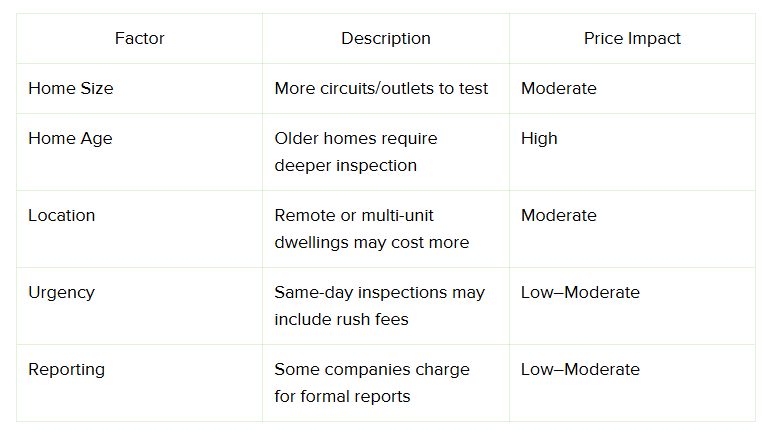
The price may also vary based on how thorough you want the inspection to be. Some companies charge more for detailed reports, while others include everything in one bundled rate.
What does an Electrical Inspection include?
Here’s what you can typically expect from a professional inspection:
- Breaker Panel & Circuit Analysis
- Wiring Evaluation (visible and accessible areas)
- GFCI and AFCI Protection Checks
- Smoke & Carbon Monoxide Detector Testing
- Load Capacity Review (important for HVAC + appliances)
- Outlet, Switch & Fixture Testing
- Grounding & Bonding Verification
- Code Violation Identification
- Written Safety Report (if requested)
For more details, visit our Electrical Inspections page and explore our residential inspection services.
Types of Electrical Inspections
Not all inspections are the same. Here are four common types:
1. Pre-Purchase Inspection
Usually ordered during the home-buying process. Confirms the home’s electrical system is safe and up to code.
2. Pre-Sale Inspection
Helps sellers catch and resolve electrical issues before listing—great for preventing negotiations falling through.
3. Routine Maintenance Inspection
Recommended every 3–5 years, especially in older homes. Think of it like an annual check-up for your wiring.
4. Renovation or Addition Inspection
Required when upgrading panels, adding rooms, or installing large appliances.
Each type of inspection has its own scope and pricing. If you’re not sure what you need, our team is happy to help walk you through it.
When Should You Schedule One?
You should consider an inspection if:
- Your home is more than 25–30 years old
- You’ve recently purchased a home with no recent inspection report
- You’ve noticed flickering lights, frequent breaker trips, or discolored outlets
- You’re planning a renovation, EV charger, or solar panel installation
- You’re adding a hot tub, pool pump, or HVAC unit
- After a major weather event or power surge
Still on the fence? Check out Why Hiring a Licensed Electrician Is Essential to understand how dangerous outdated wiring can be.
What Impacts the Price?
Is It Worth the Investment?
Absolutely. A small fee today can prevent major safety hazards tomorrow. Consider this:
- Electrical fires are responsible for 51,000 U.S. home fires annually
- Outdated panels can’t handle modern loads from appliances or electronics
- Home sale delays often stem from undisclosed code violations
- Insurance claims may be denied if electrical systems weren’t up to code
Can You DIY It?
Short answer: No. You can spot signs of wear (like burnt outlets), but only a licensed electrician has the tools and expertise to:
- Check voltage and amperage stability
- Assess internal wiring without damaging drywall
- Test GFCI/AFCI trip timing
- Confirm compliance with NEC (National Electrical Code)
Want to learn more about electrical inspections? Purchase the NFPA’s electrical inspection guidelines for the official stance.
Electrical Inspection FAQs
Q: How long does an electrical inspection take?
Most inspections take 90–180 minutes, depending on the size and complexity of your home.
Q: Will I get a written report?
Yes. At PowerMeans Electric, we can provide a full report with findings, safety concerns, and upgrade recommendations.
Q: Do I need to be home?
Yes, especially if someone needs interior access to check panels, outlets, and detectors.
Q: Do inspections include repair work?
No. Inspections are diagnostic only. However, we’ll provide a quote if you need any work.
Bonus Tip: Electrical Inspections Boost Resale Value
If you plan to sell your home, a clean inspection report can help buyers feel secure. Helping your listing stand out and protect you from surprises during escrow.
Final Thoughts: What You’re Truly Paying For
You’re not just paying for an inspection—you’re investing in:
- A safer home
- Lower risk of electrical fires
- Peace of mind for your family
- Confidence in your home sale or remodel
Ready for a Check-Up?
If your home hasn’t had an inspection in 5+ years, or you’re preparing to list, renovate, or just want peace of mind, now’s the time.
Schedule your inspection today in Serving Dripping Springs and Central Texas with pride. Fast. Honest. Code-compliant.
When Power Means More, Call PowerMeans Electric.
Reliable. Responsive. Respectful. Every time.
Need help with this?
Our licensed electricians can handle your wiring and safety needs safely.
Have an Emergency?
Don’t risk DIY on dangerous electrical issues. We are available 24/7.
(737) 263-5823
Licensed & Insured