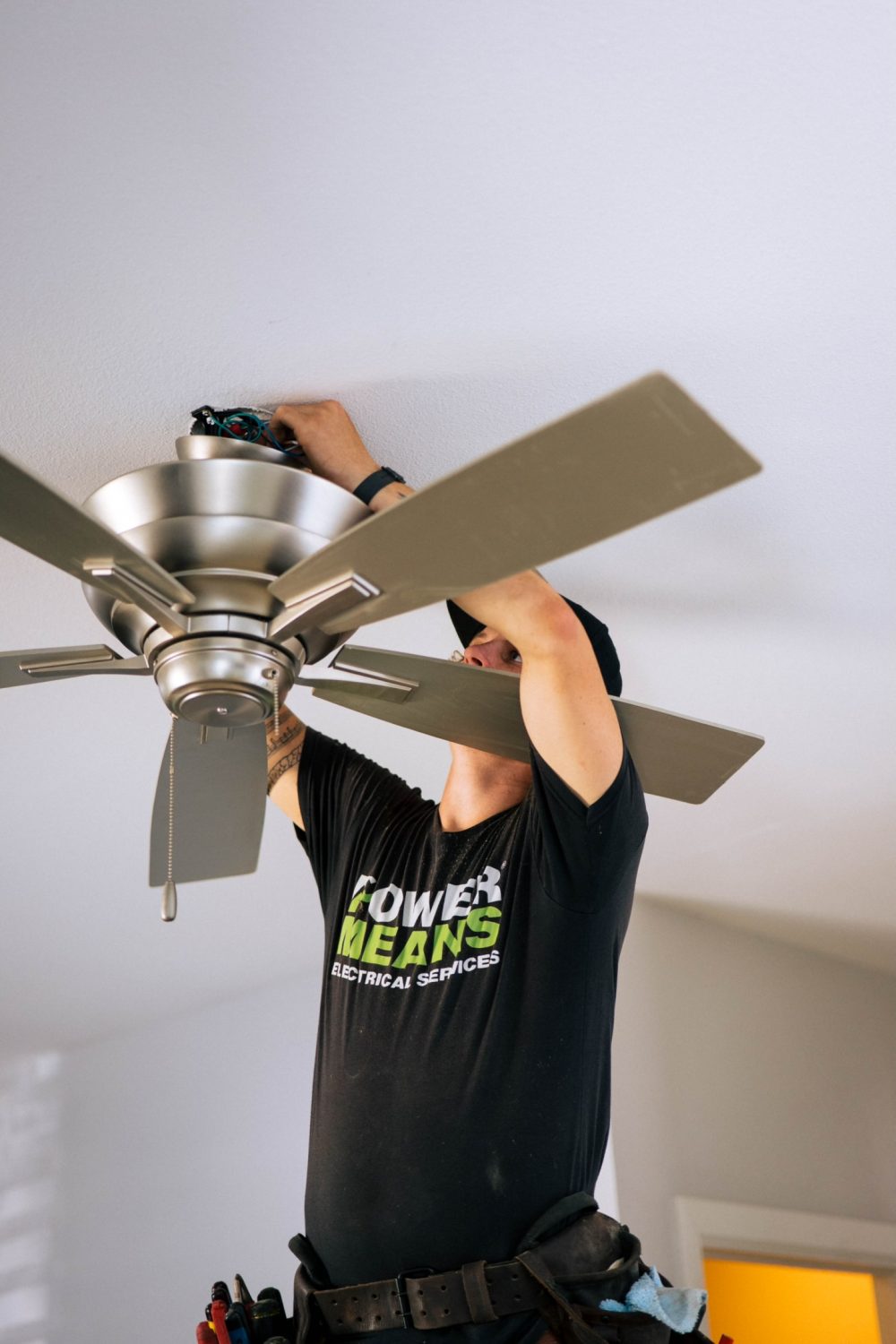
How to Prepare Your Ceiling Fans for Summer and Energy Savings Tips
As temperatures climb, homeowners start looking for ways to stay cool without driving up energy costs. One of the simplest and most affordable tools in your home is your ceiling fan. When set correctly and properly maintained, ceiling fans can improve comfort while reducing strain on your air conditioning system.
At PowerMeans Electric, we help homeowners in Hays and Travis Country to improve energy efficiency and keep electrical systems running safely. If you’ve ever searched “ceiling fans which direction in summer”, you’re asking the right question — because proper fan direction makes a significant difference.
Ceiling Fans Which Direction in Summer?
Let’s start with the most important step: ceiling fans which direction in summer should they spin?
In the summer, your ceiling fan should rotate counterclockwise.
When spinning counterclockwise, the blades push air downward. This creates a wind-chill effect that makes your skin feel 4–6 degrees cooler, even though the thermostat setting hasn’t changed.
Here’s how to check:
- Stand directly under the fan
- Turn it to medium or high speed
- If you feel steady airflow pushing down, it’s set correctly
If not, turn the fan off and flip the small directional switch on the motor housing.
Understanding ceiling fans which direction in summer allows you to raise your thermostat by 2–4 degrees without sacrificing comfort. That small adjustment can lead to noticeable savings over the course of the season.
Clean the Fan Blades
Dust buildup reduces airflow efficiency and can circulate allergens throughout your home. Even a thin layer of dust affects performance.
Before peak heat arrives:
- Turn off the fan
- Wipe blades with a damp microfiber cloth
- Use mild cleaner for stubborn buildup
- Dry thoroughly before restarting
Clean blades move air more effectively and help your cooling system operate efficiently.
Check for Wobble and Loose Hardware
Over time, vibration can loosen screws and mounting brackets. Loose hardware may:
- Reduce performance
- Cause noise
- Strain the motor
- Create safety concerns
Inspect blade screws, down-rod connections, and mounting brackets. If the fan wobbles excessively or makes buzzing or grinding sounds, it may need professional adjustment.
Ceiling fans must be mounted to an approved electrical box designed to support their weight. If you’re unsure about the installation, a licensed electrician can ensure everything is secure and code compliant.
Upgrade to an Energy-Efficient Ceiling Fan
If your fan is more than 10–15 years old, upgrading can improve airflow and efficiency.
Modern energy-efficient ceiling fans:
- Move more air using less electricity
- Operate more quietly
- Include remote or smart controls
- Feature integrated LED lighting
Improved airflow reduces reliance on air conditioning, especially during peak afternoon heat.
Professional installation ensures safe wiring, proper mounting, and optimal performance.
Additional Low-Cost Ways to Lower Your Electric Bill This Summer
Knowing ceiling fans which direction in summer is only part of the equation. Combine proper fan settings with these affordable strategies to maximize savings.
Raise Your Thermostat Slightly
The Department of Energy recommends setting your thermostat to 78°F when home.
Each degree you raise the temperature can reduce cooling costs by up to 3%. When paired with ceiling fans spinning counterclockwise, most homeowners remain comfortable at slightly higher settings.
Replace Air Filters Regularly
Dirty HVAC filters restrict airflow and force your system to work harder.
Replace filters every 30–60 days during heavy use. Clean filters:
- Improve efficiency
- Reduce energy consumption
- Extend system lifespan
Block Direct Sunlight
Sunlight entering through windows significantly increases indoor temperatures.
Consider:
- Blackout curtains
- Solar shades
- Reflective window film
- Exterior shading
Blocking heat before it enters your home reduces cooling demand immediately.
Seal Air Leaks
Cool air escaping through gaps wastes money.
Seal:
- Window frames
- Door edges
- Attic access points
- Exterior wall outlets
Weather stripping and caulk are inexpensive upgrades with immediate impact.
Switch to LED Lighting
Incandescent bulbs generate heat while operating. LED bulbs use up to 75% less energy and emit far less heat, reducing your cooling load.
Upgrading lighting lowers both lighting and cooling costs.
Eliminate Standby Power Use
Electronics continue drawing power even when turned off.
Common culprits include:
- Televisions
- Gaming systems
- Cable boxes
- Small appliances
- Chargers
Smart power strips help reduce unnecessary standby energy use.
When to Call a Professional Electrician
Basic maintenance is simple, but electrical issues should never be ignored.
Call a licensed electrician if:
- Your fan flickers or loses power
- You hear buzzing from switches
- The fan wobbles excessively
- You notice burning smells
- You are installing a new or heavier fan
- You want upgraded switches or smart controls
Safe installation protects your home and ensures long-term performance.
Frequently Asked Questions
Ceiling fans which direction in summer?
Counterclockwise. This pushes air downward and creates a cooling breeze.
Do ceiling fans actually cool a room?
No. They cool people by creating airflow. Turn them off in empty rooms to save energy.
How much can ceiling fans reduce AC costs?
They allow you to raise your thermostat 2–4 degrees, potentially saving up to 10% on cooling costs.
Is it expensive to run a ceiling fan?
Most ceiling fans cost only a few cents per hour — far less than running air conditioning.
Can upgrading my ceiling fan lower my electric bill?
Yes. Modern fans move air more efficiently and reduce strain on your cooling system.
Stay Cool and Save Smart
Preparing your ceiling fans for summer is one of the easiest and most affordable ways to improve comfort and lower energy bills. When you understand ceiling fans which direction in summer and combine that knowledge with smart energy habits, you can stay cool without overspending.
If you need ceiling fan installation, repairs, or electrical upgrades, contact PowerMeans Electric to help you stay safe, efficient, and comfortable all summer long.